
The gallery’s new show gathers six artists from Berlin under the title There’s a Man in a Smiling Bag—a reference to one of the three clues given by a strange gentle giant to an FBI agent in episode 1, season 2 of David Lynch’s famous Twin Peaks. This quotation emphasises the six artists’ common feature: an approach tinged in mystery.
Drawing both from pop culture references and from mythological figures, the works brought together in this exhibition weave a sort of ever-changing tale through time and dimension. Shifty characters, transfigured bodies, organic flesh, and crude movements spread through the exhibition like ghosts. As a mirror of both the fragility of time and of its flexibility, There’s a Man in a Smiling Bag offers a breach, an anarchic space continuum, where systems collapse and new meanings rise to the surface. The six artists’ voices go beyond certainties to let the bizarre speak. Through a multitude of media and techniques —tapestry, oil, metal, plexi, paper, textile, and video—, the sensitive materiality of the works fills the gallery space with a playful darkness, moving its viewers to a particularly unique atmosphere, both apocalyptic and enchanting. Full of literary, pictorial, and cinematographic references also, each work harbours multiple layers to dig through, to unveil the mystery (maybe).
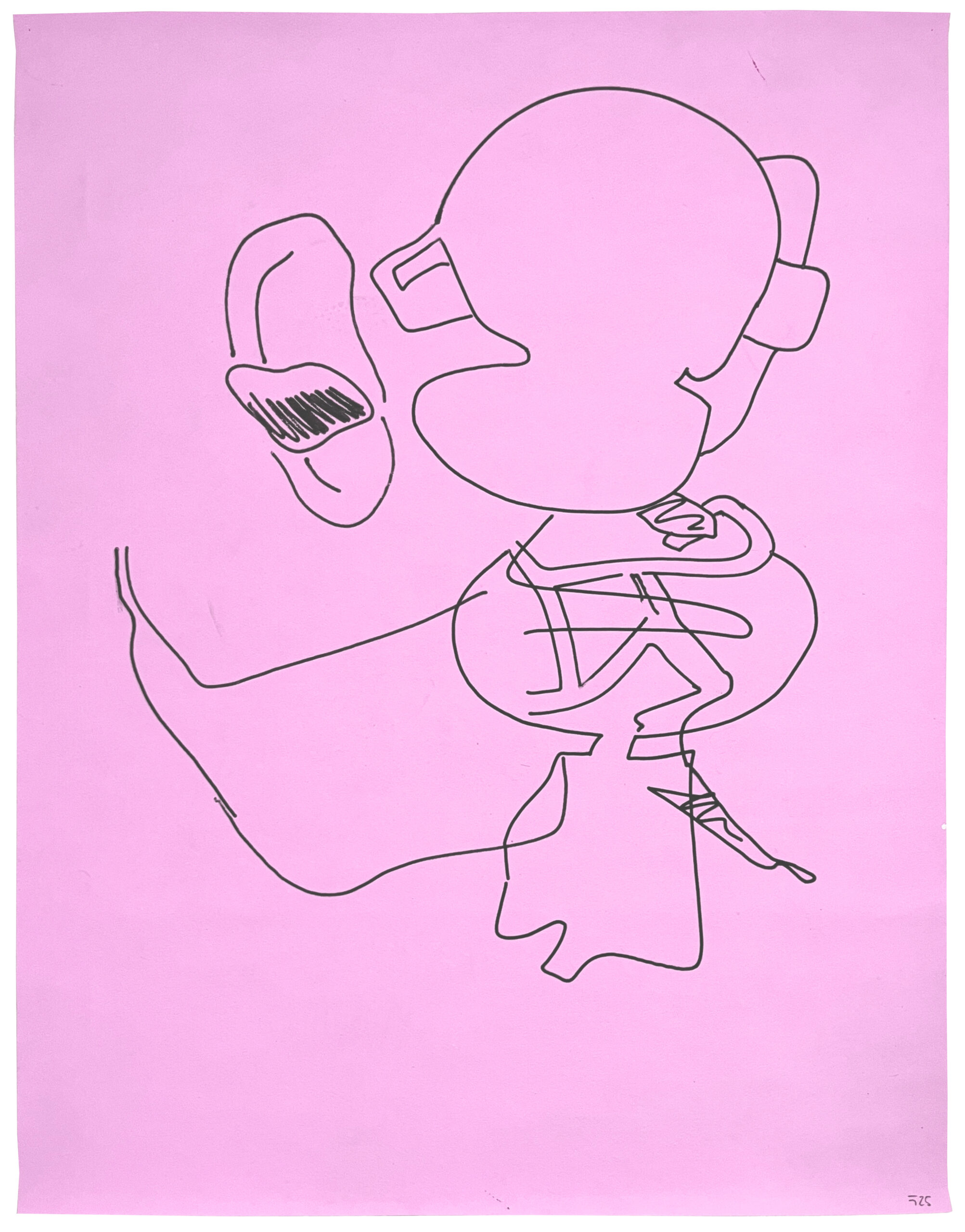
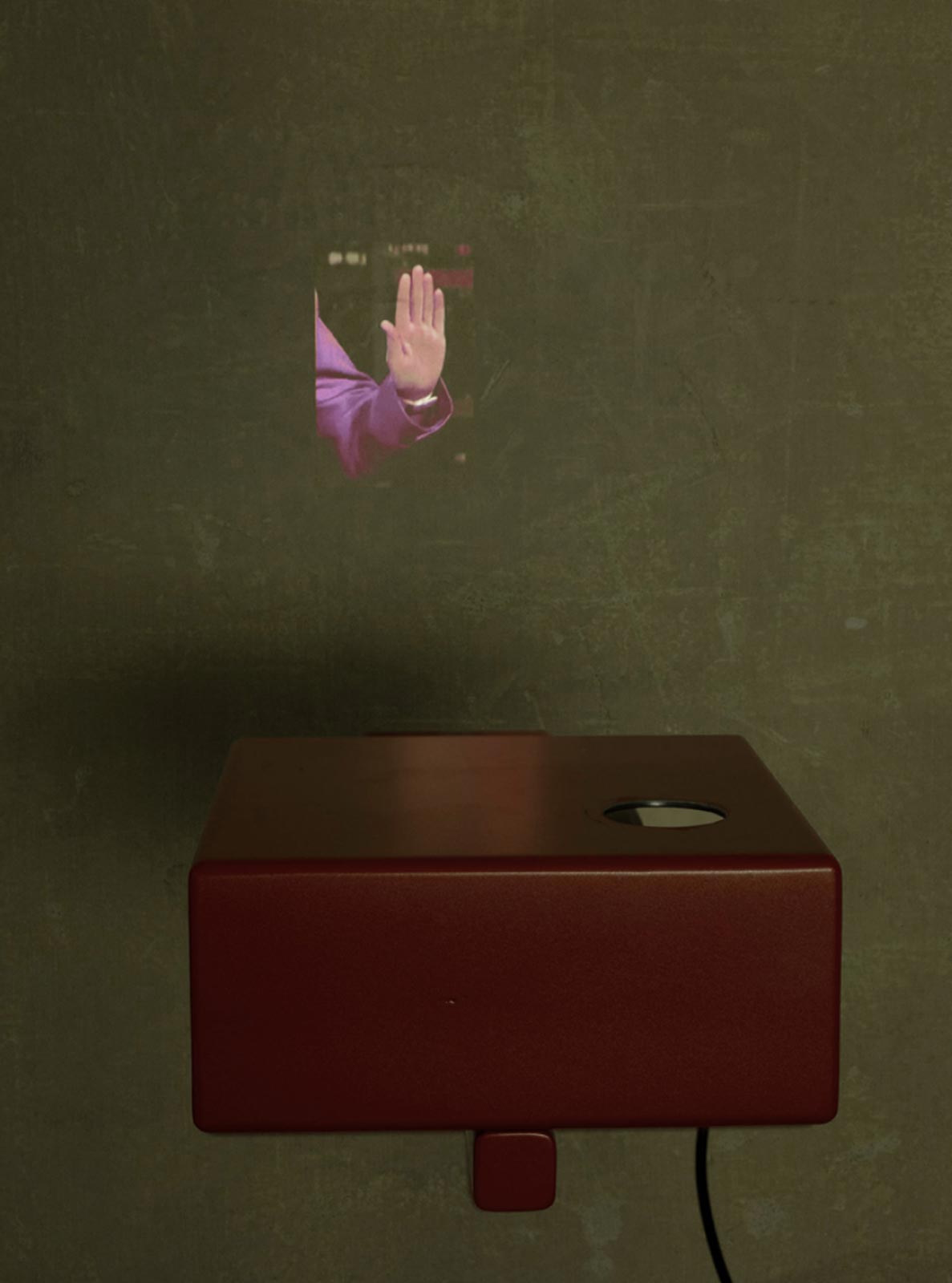

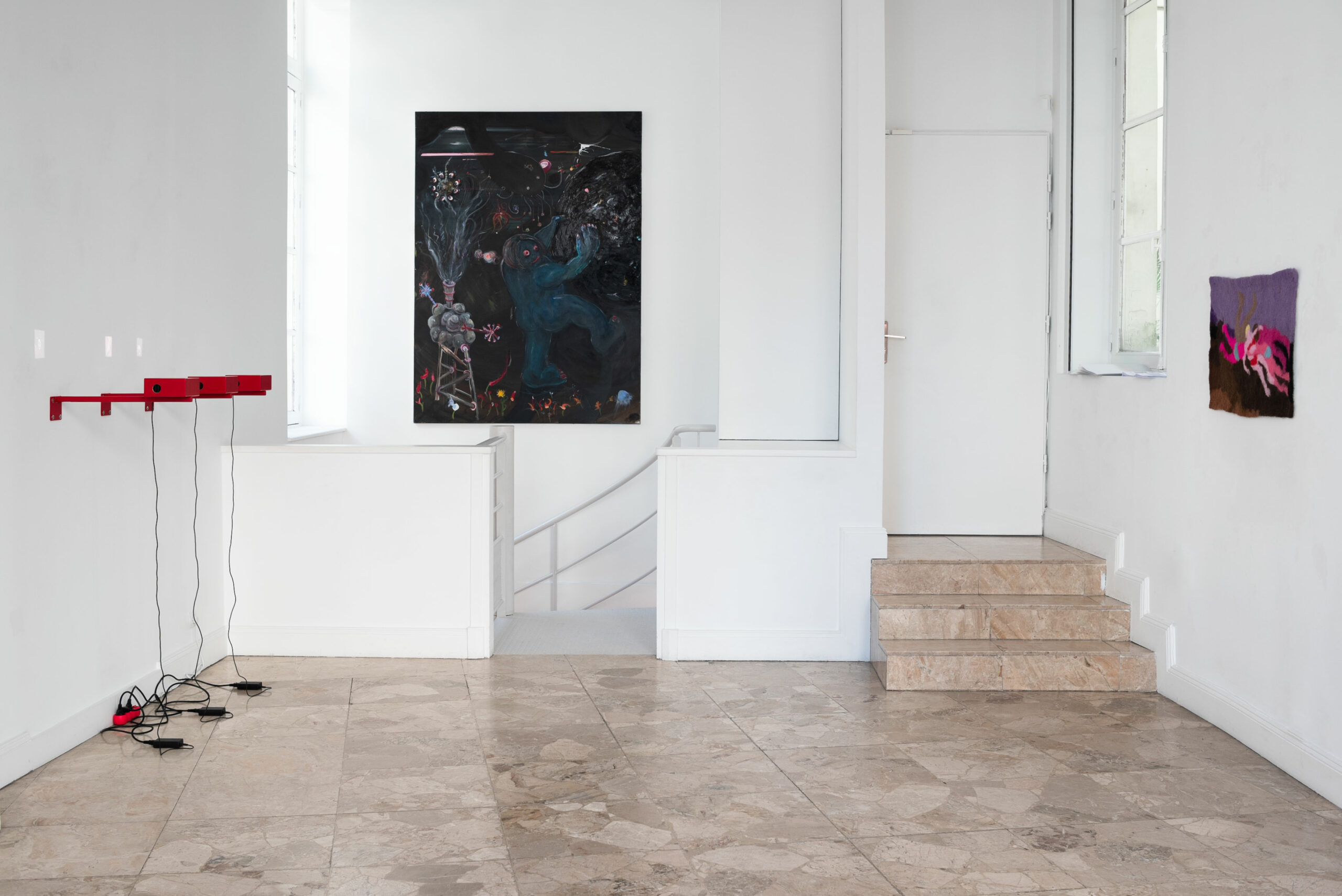
Inspired by cinema —both for its inexhaustible source of unreality and for its composite form of successive shots—, Heiner Franzen (born in 1961 in Papenburg, Germany) builds multi-faceted tales, in between dreams and myths of a murky present. Like explorations of the human psyche, his video installations and drawings, whether on paper or on felt, are built as fragments, as eclectic constellations feeding a larger system, in which images, spaces, movements, and memories are constantly rewritten. Using glitch as matter, he plays with cross-sections, lines, and planes to shift the context and widen the narrative. In his video installation Hands, he presents a fragmented choreography of Democratic senator Katie Porter’s hand gestures, staging her interventions between words and gestures. When Heiner Franzen saw her speak for the first time, he had the impression that she was using Albrecht Dürer or Leonardo Da Vinci drawings as storyboards. Here, the physical presence and the active body language of the narrative is highlighted.
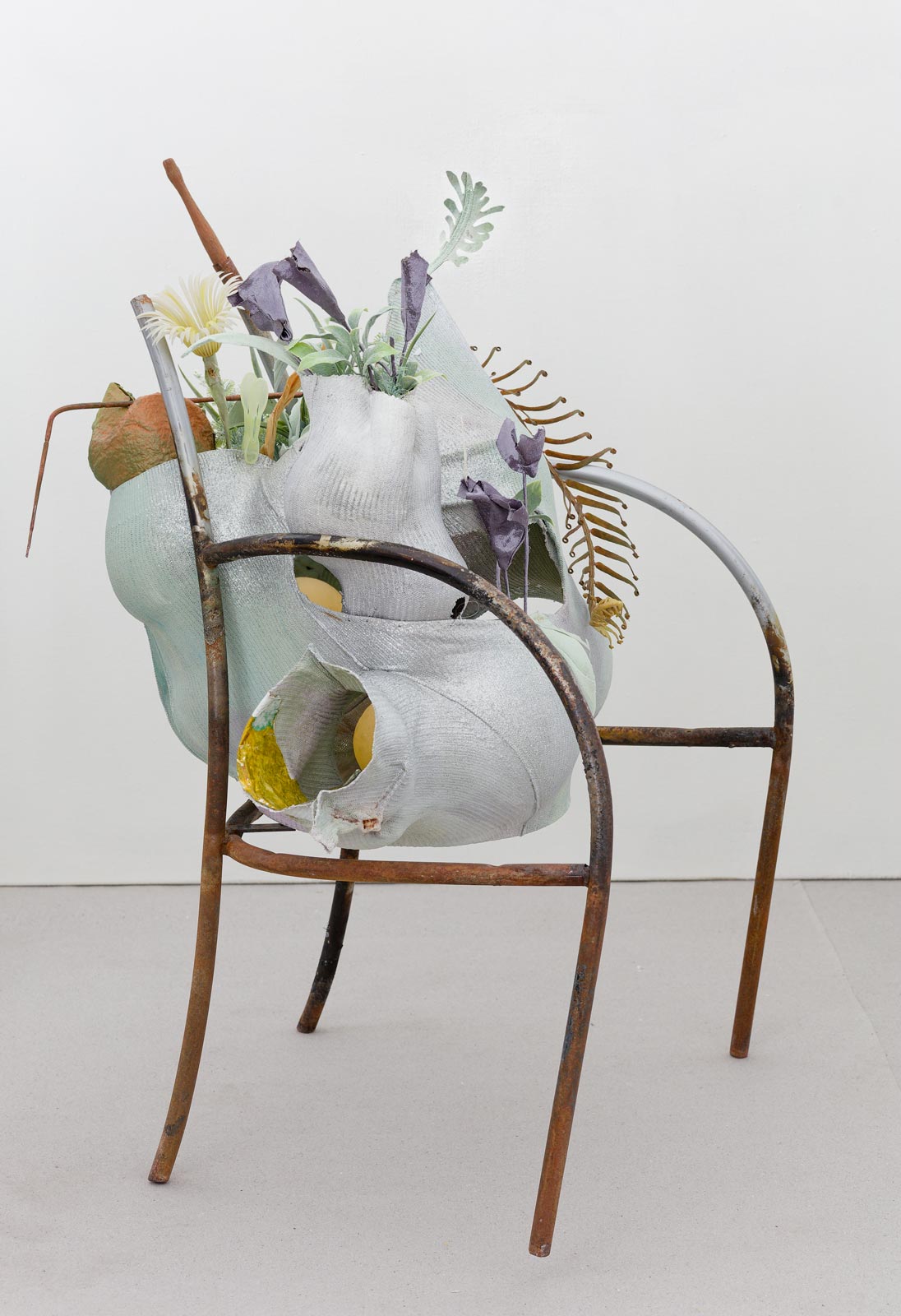
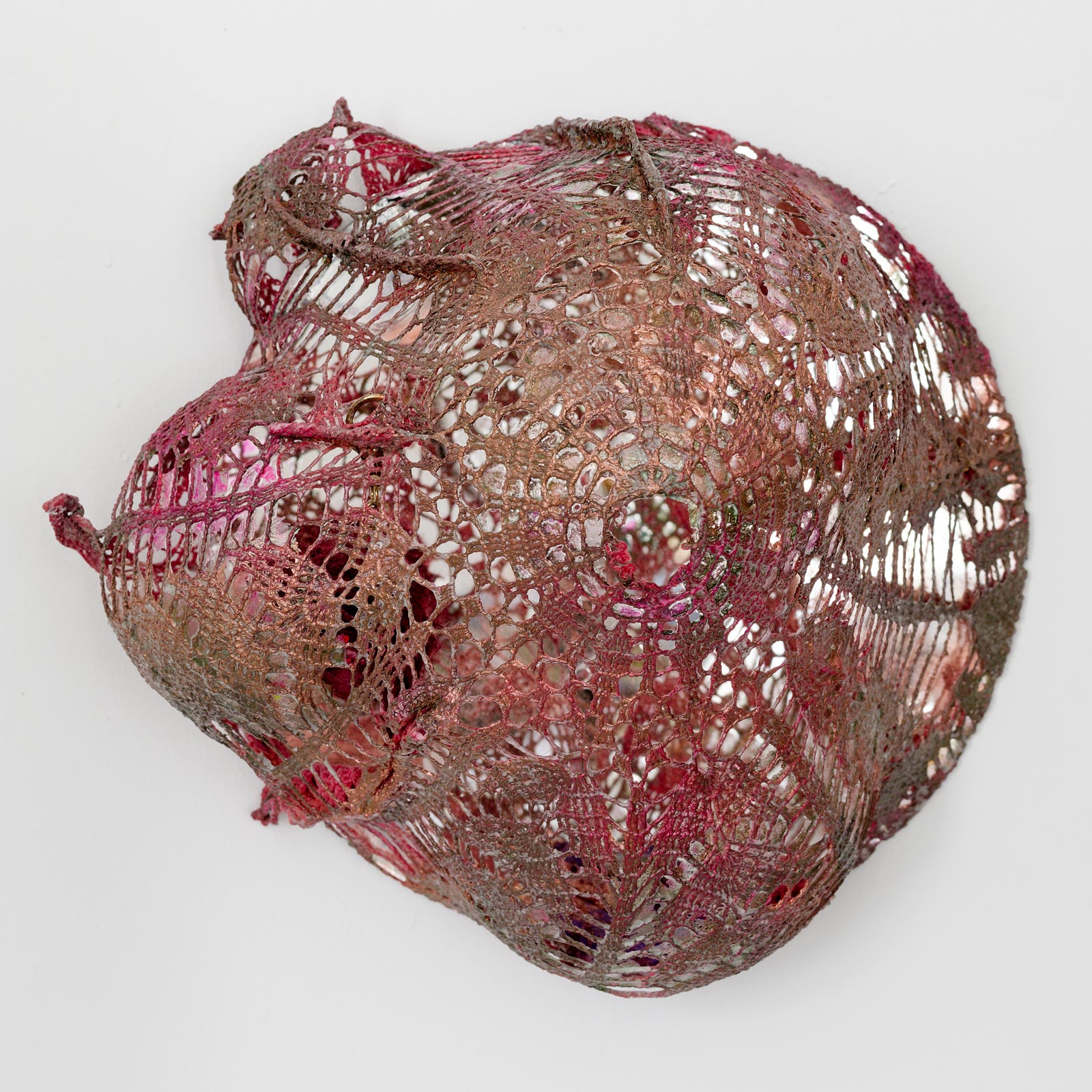
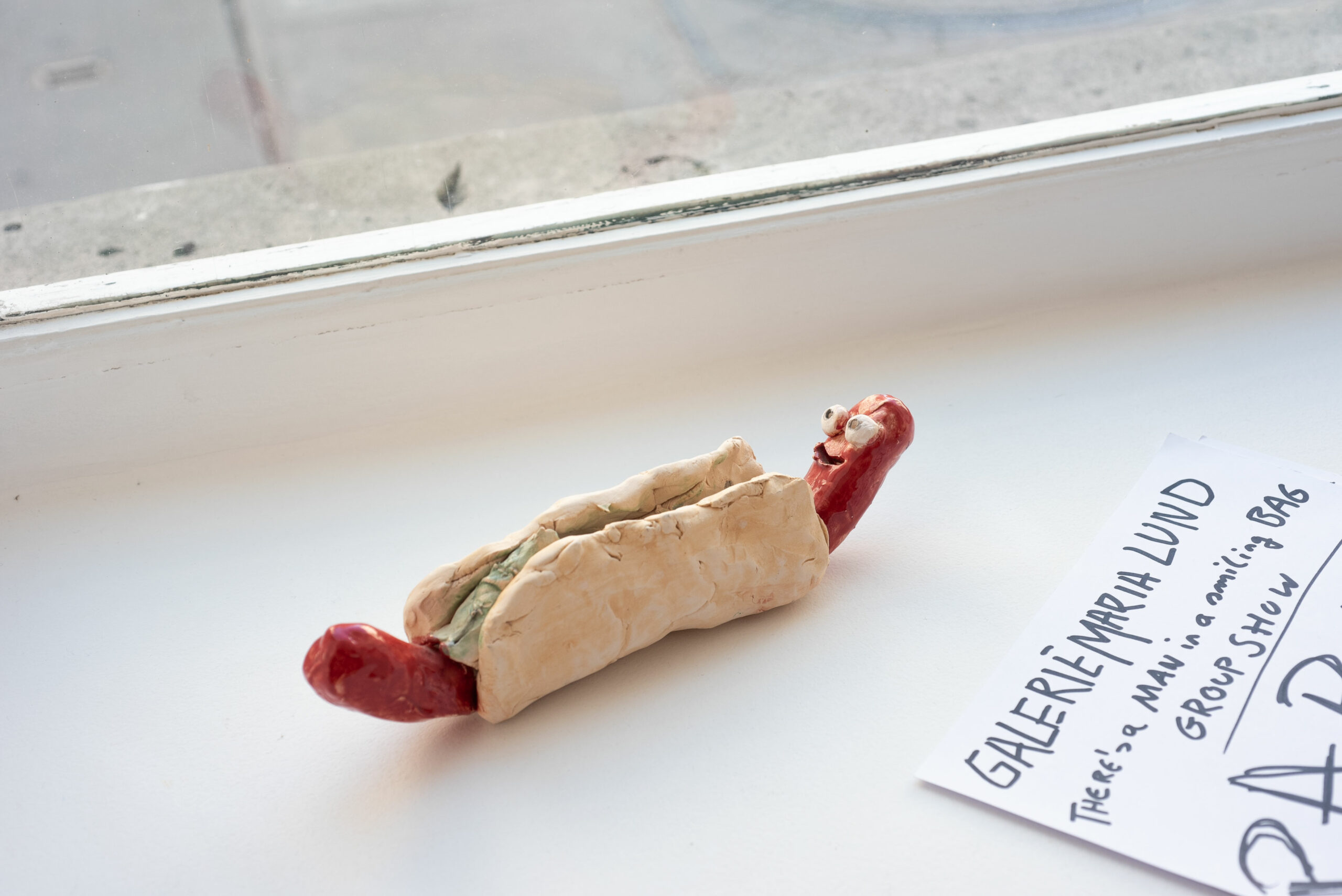
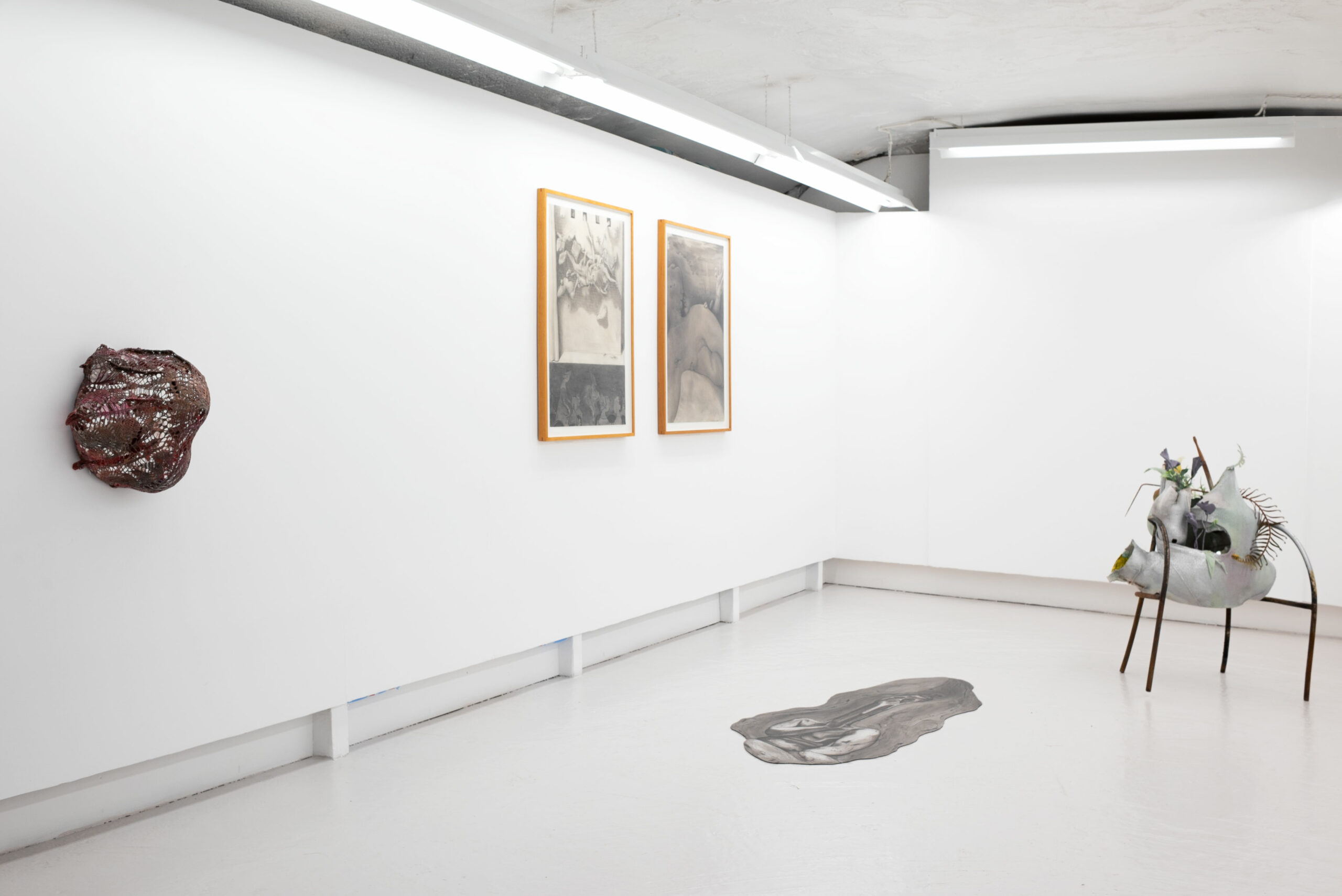
Fee Kleiss’s (born in 1984 in Kuchen, Germany) work is built from collecting and adding —looking for beauty, grace, and even innocence in discarded mundane objects. Lost and forgotten items are brought together in her sculptures as in her paintings and collages, thus subverting the narrative given to them, but also offering a sensitive and critical viewpoint on the society that made them. A chair structure turned into a cocoon; Grey Lodge seems to be sheltering a colony of metamorphosing beings and plants. Its title mixes the Lynchian concepts of Black Lodge (pure evil) and White Lodge (its opposite) in Twin Peaks. Starfish caught in a net, Shelly harbours a shining treasure, like a pearl in an oyster. Playing with associations and contrasts across miscellaneous material, Fee Kleiß invites human feelings to intertwine —humour, tenderness, eroticism, drama, beauty, or despair. Like living and growing cells, the organic shapes she builds presents a sort of still life—or rather animated life, with a talkative, joyful, and tender landscape trying to open up new conversations.
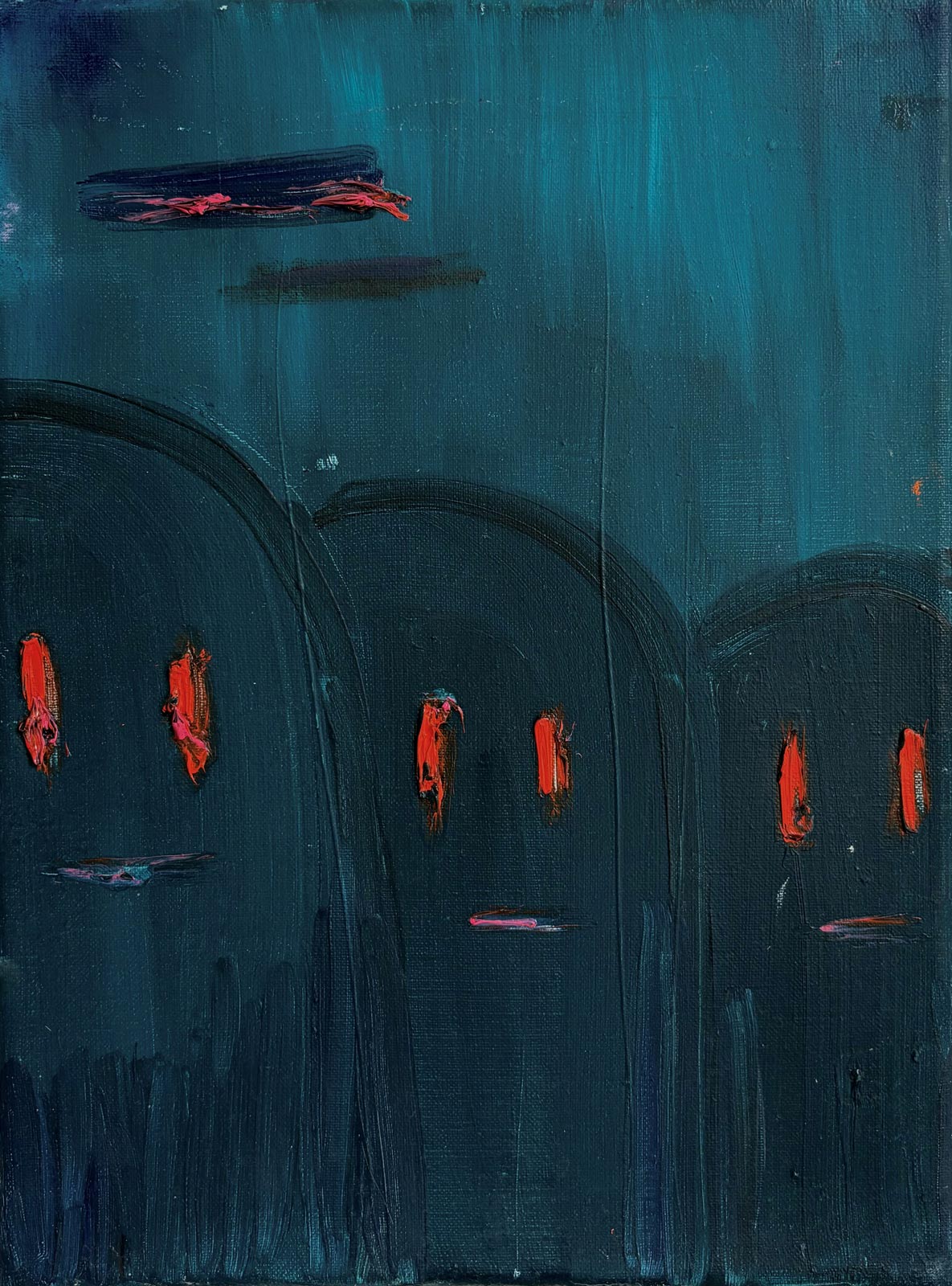
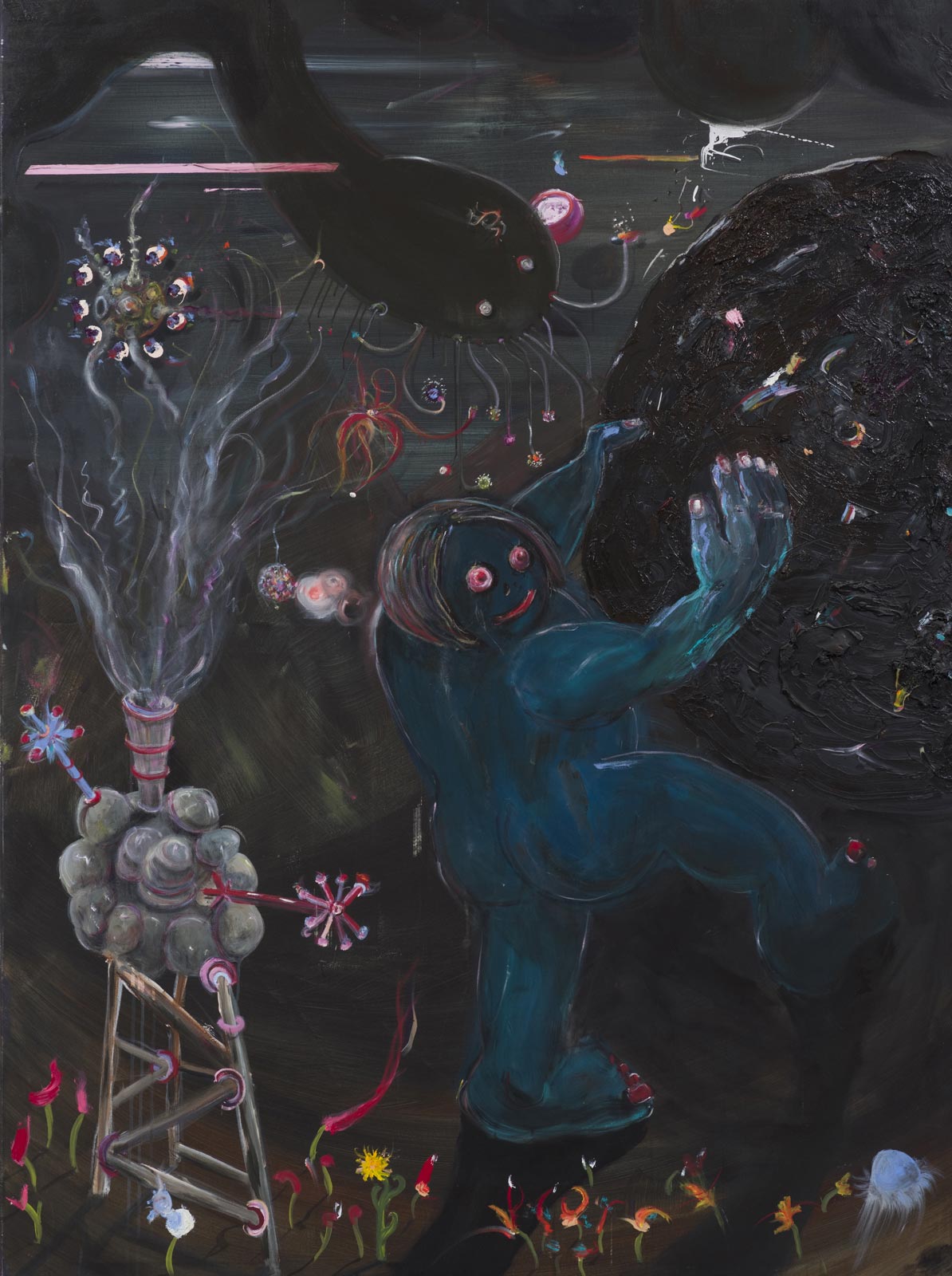
Both soft and direct, Philip Grözinger (born in 1972 in Brunswick, Germany) does not beat about the bush: his visual language is simple but efficient. In his dense, colourful works, drama and daily intimacies meet: the morning coffee faces a coming accident, surrounded by a poetry of little flowers, suns, rainbows, and perambulating cats. With everything on the same plane, with drama elbowing the mundane, their vulnerable essence is visible. Disconcertingly contradictory, these images are misleading at first. Philip Grözinger strives to create tension, thus taking the absurd beyond a simple idea to flesh it out. With his painting True Love, the artist juxtaposes Camus’s Myth of Sisyphus and Johnston’s song True Love Will Find You in the End. Here, the boulder eventually becomes one with the man. Philip Grözinger shows Sisyphus mid-process, torn but alive. To Camus’s sense of meaninglessness, Johnston’s song answers: Something true will find you in the end.As for his painting Gorgone, it reflects the artist’s fascination for this tragic figure, a gorgon destined to kill with her gaze after her very existence being violated. With three faces with flaming eyes and three little closed mouths, we get a sense of the unspeakable, of silence after a tragedy.
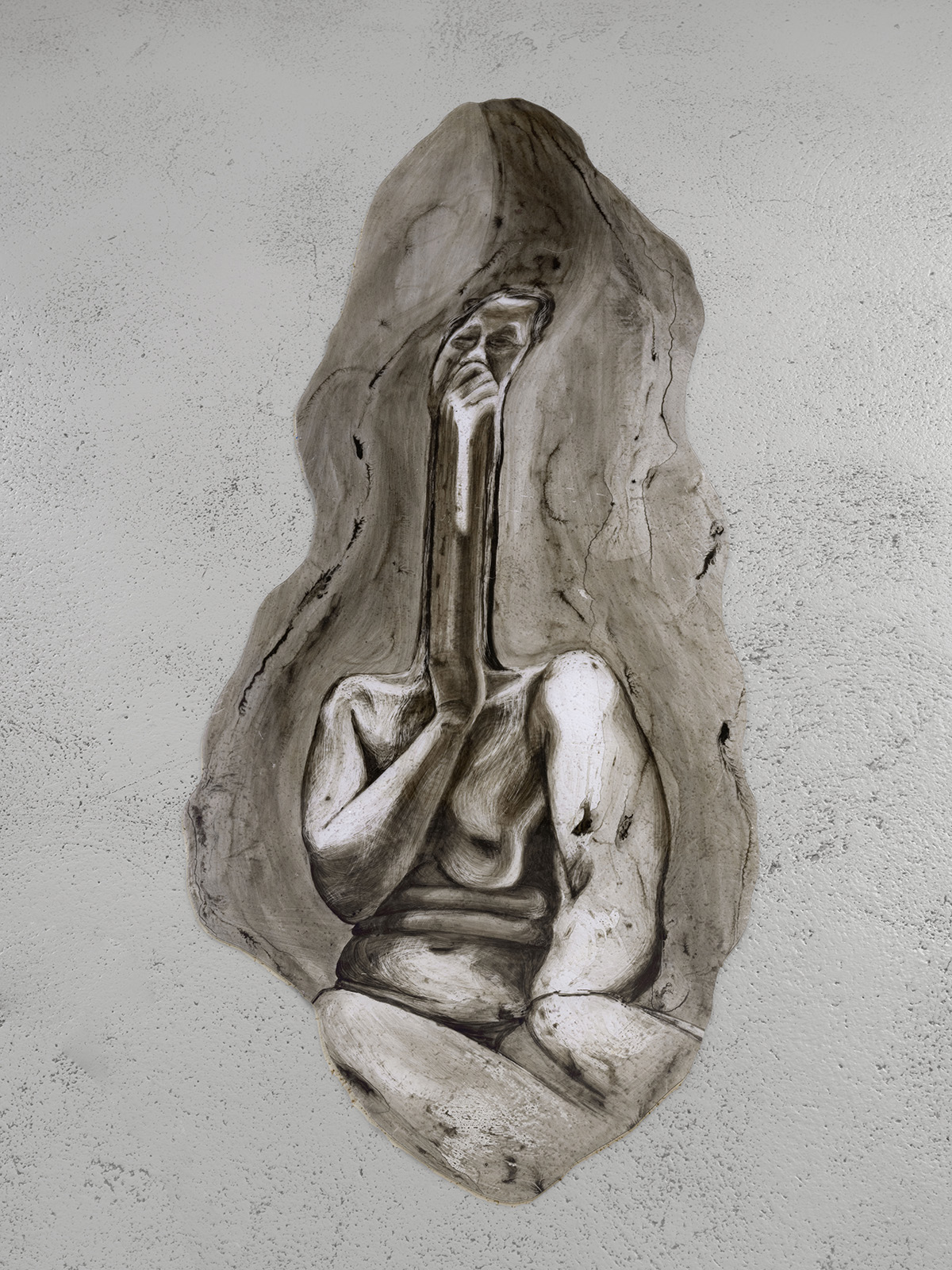
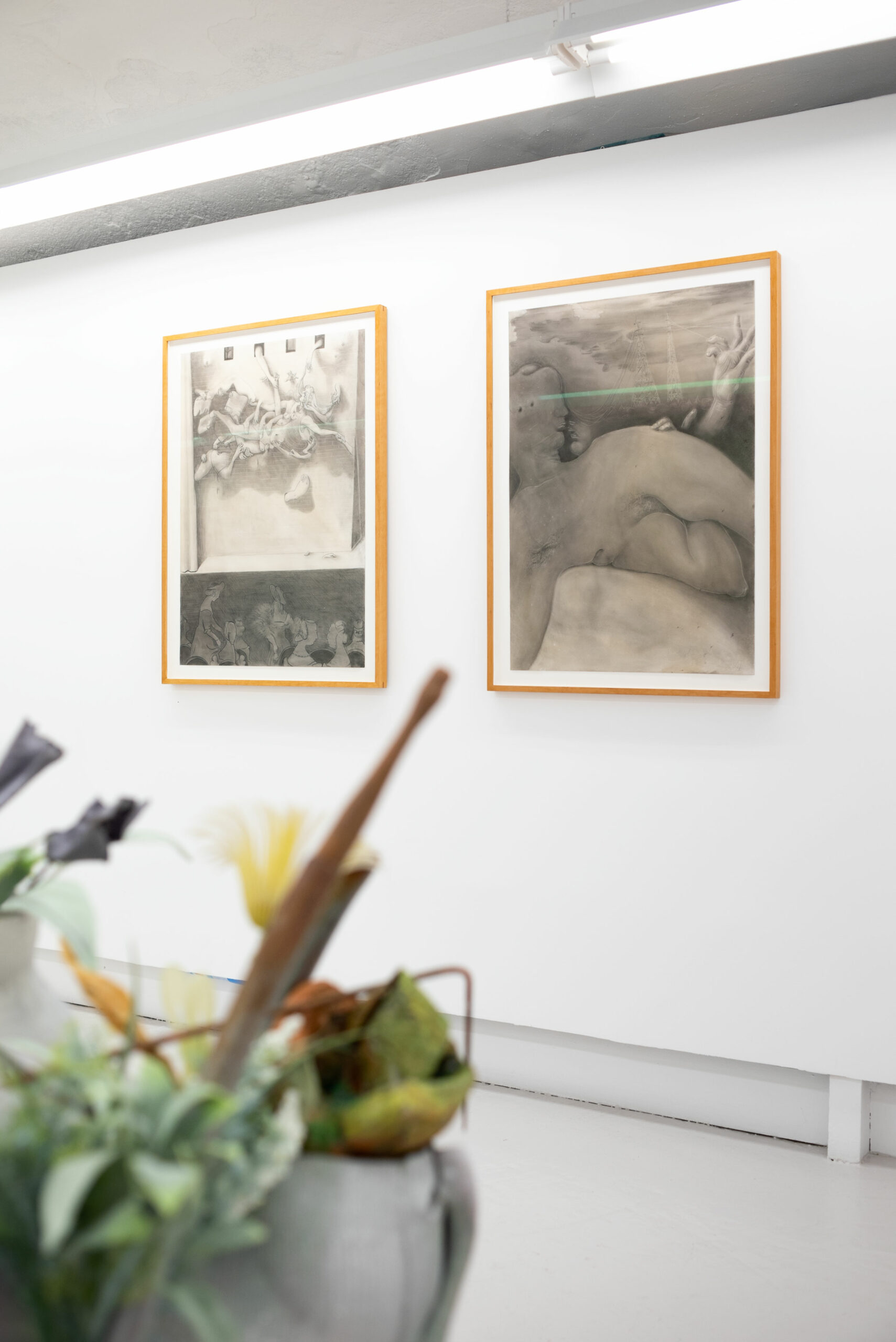
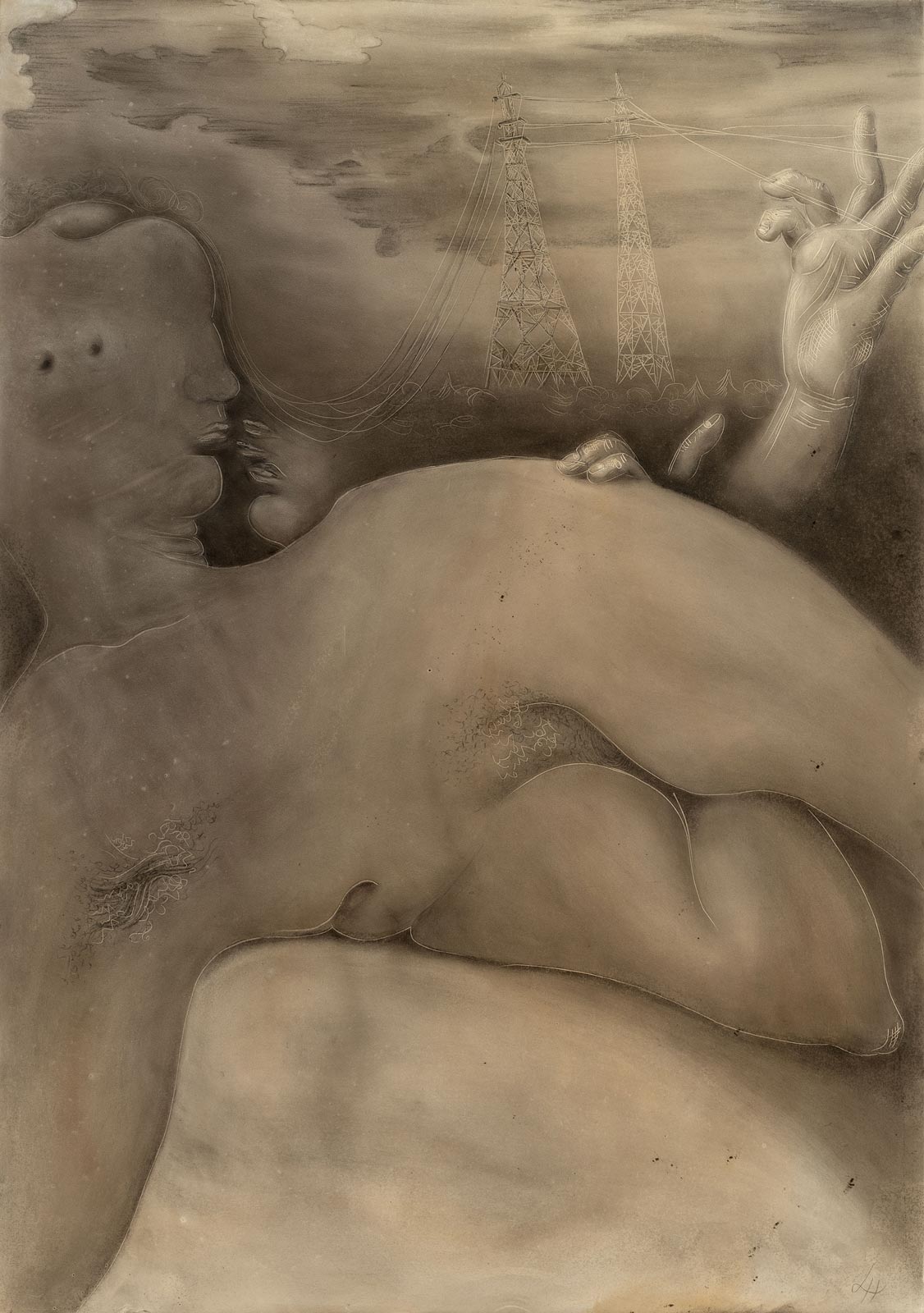
By drawing freely and organically, Lou Hoyer (born in 1985 in Berlin, Germany) creates unique worlds, like a joyful metamorphosis of life. Recurring symbols seem to sketch a path, a common thread both in her works and in her exhibitions, allowing her to play with the seen and the believed to be seen. Often, a curtain drawn on the wall or at the background of an artwork turns the drawing into a show, either opening the doors of these surrealist scenes or hiding the schemes developing there. Her work on cut plexi gives her a new surface that is less defined. A distorted, almost grotesque, body seems caught mid-metamorphosis, highlighting the viewer’s authority, overlooking the work. In the drawings presented (Minor second – Kleine Sekunde and Behind the Curtain), the body itself is both active and passive, multiplying, opening, revealing, turning its curves in a world to explore.
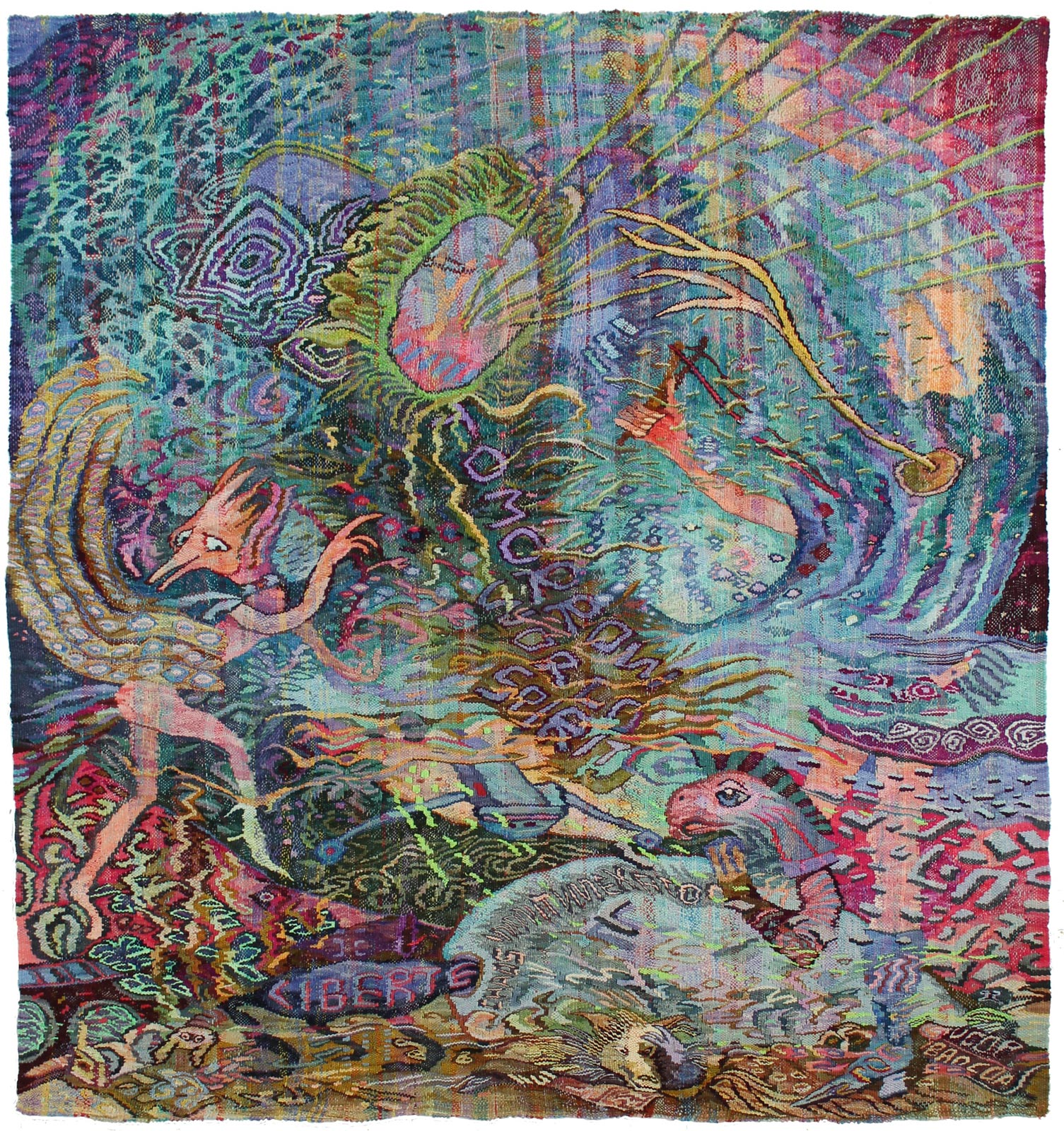
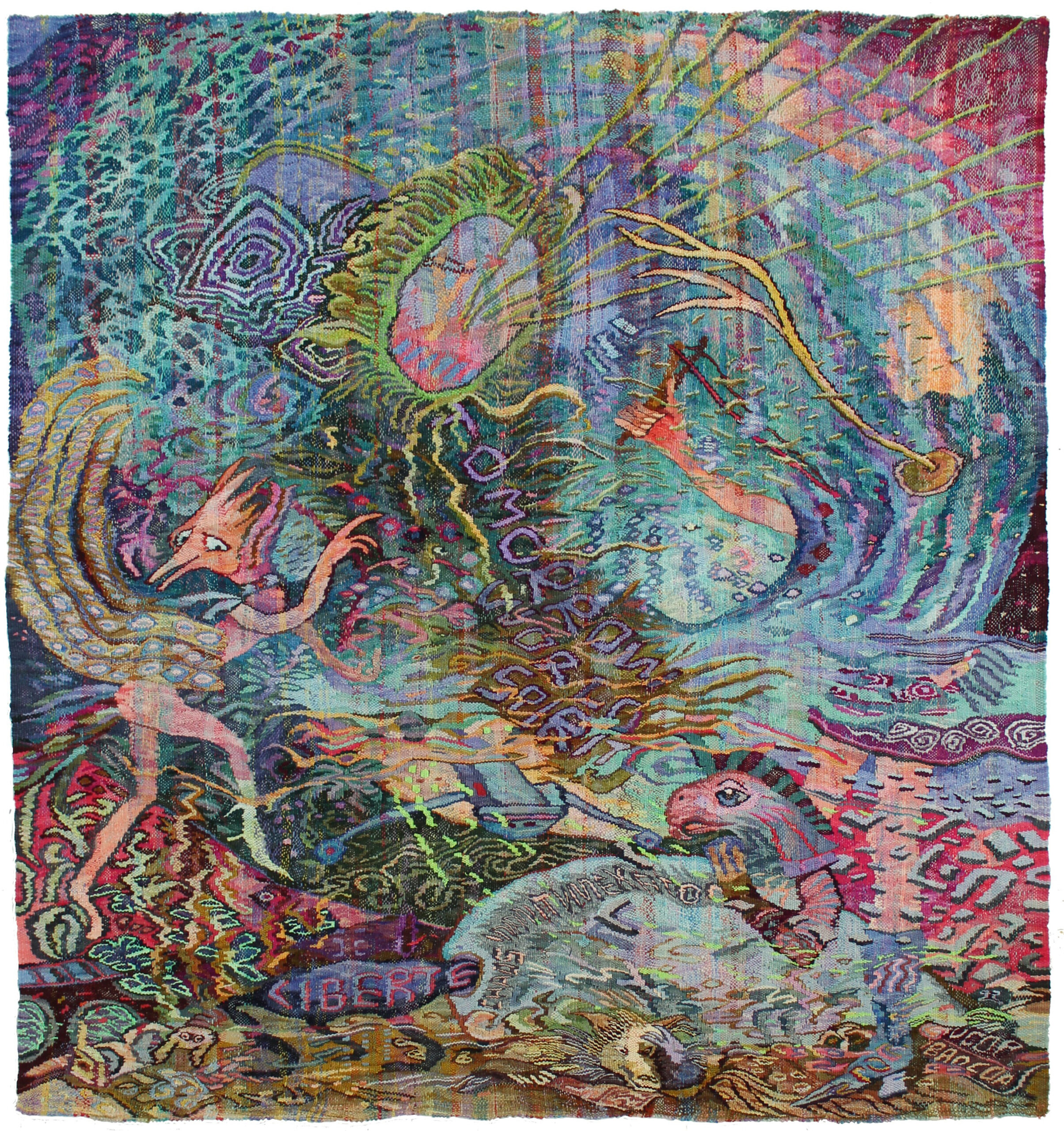
In Kata Unger’s (born in 1961 in Berlin, East Germany) tapestries, codes and chaos are intertwined. The woven fabric is the vehicle for a rich imagery, reminiscent of medieval worlds, where imaginary beings and humans coexist. Her approach is punk, rebel, and critical: words like slogans intrude on scenes where the beings try to float. Raft of Medusa or Noah’s Ark— struggle, sex, pain, and game are all brought together on shifting grounds or in the turbulences of a maelstrom. A struggle between romantic dreaming and bumpy illusions is carried by a delicate palette, as well illustrated in Mystical Anarchists. Philosophical Zombies. Through the slow and fastidious process of jacquard weaving, Kata Unger patiently reflects on the world, her gaze both looking straight ahead and back.
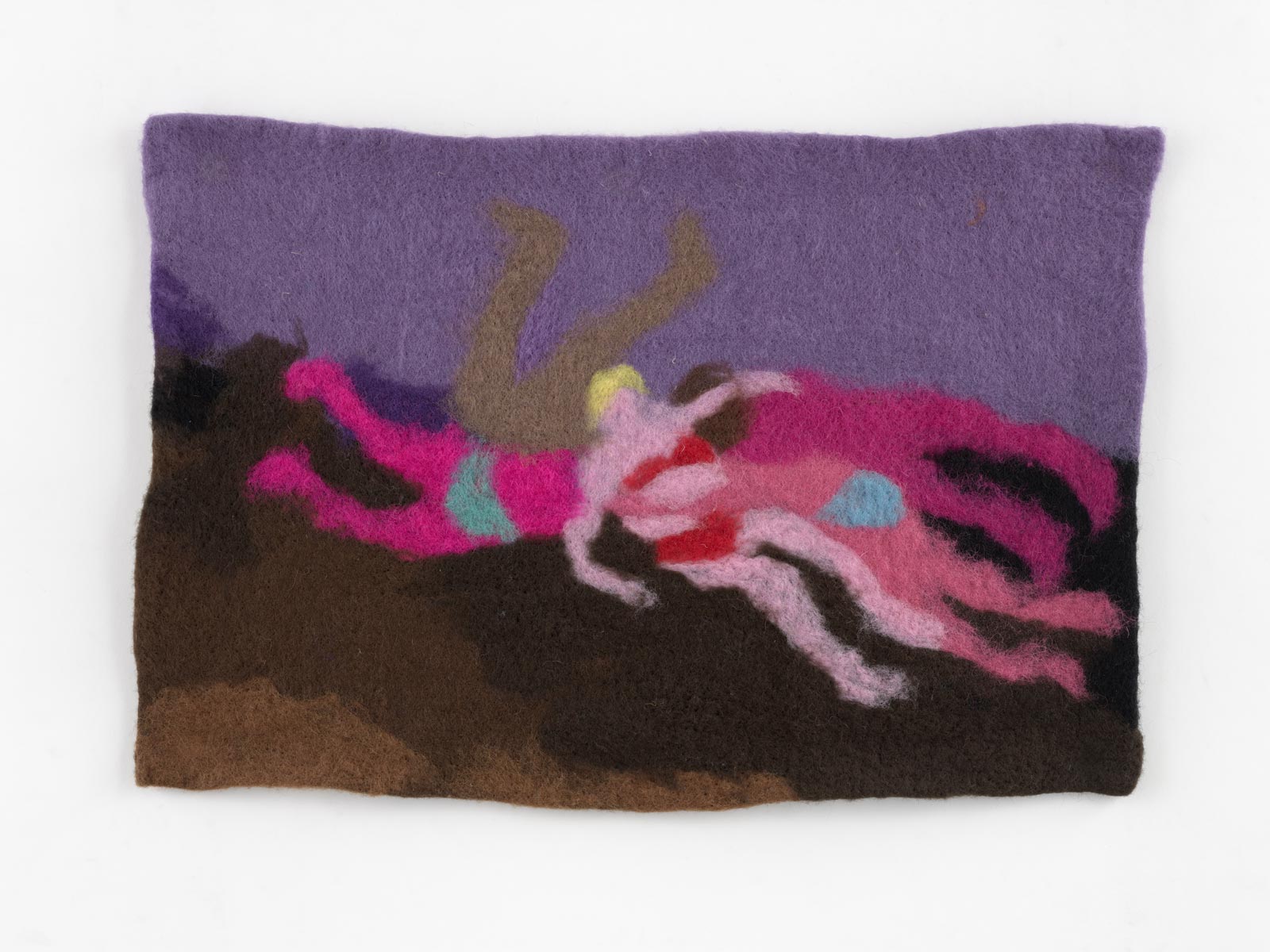
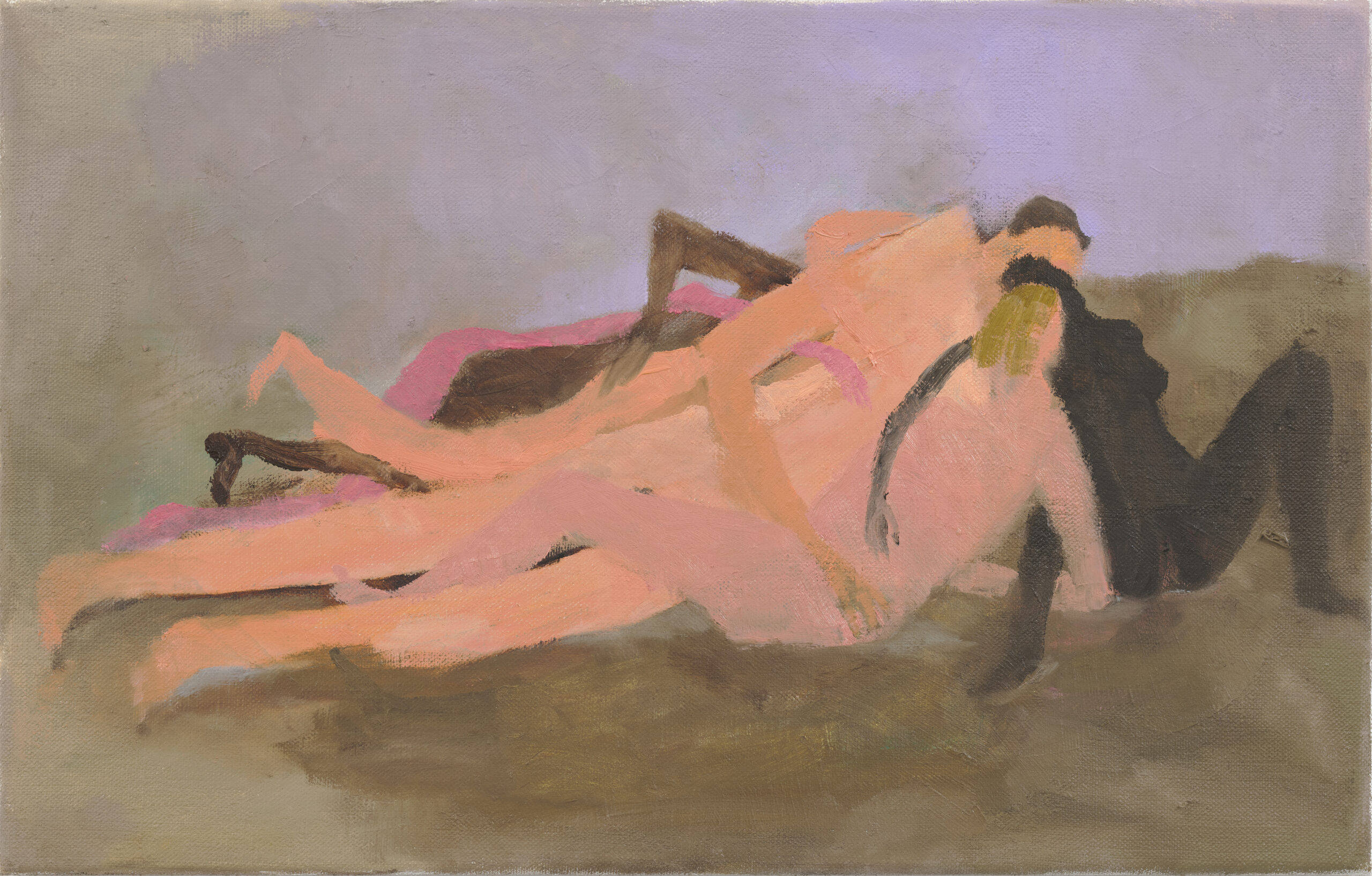
Through a multidisciplinary practice of ceramics, painting, drawing, and wool felt, Marlon Wobst (born in 1980 in Wiesbaden, Germany) stages the human body in all its simplicity. Using various media like ways to approach the body in space, he focuses his work around matter, like another bodily presence coming to absorb, dissolve, and blur boundaries. The motif of water, recurring in his work, allows him to play with murky, jerky, erased scenes, composing and decomposing the bodies he manipulates on and beneath the surface. Worked on as pictorial matter, the colourful flesh gathers, piles up, and comes together in a desire to make society. Right on the floor, the characters in Kuschler et Kuschler*innen —captured in feminine and masculine cuddles— get lost in a living, sensual hubbub, until their undoubtedly dusty silhouettes fade into the landscape.
Agenda
EXCEPTIONAL CLOSE
du 21.06 au 29.06.2024 – included
MEET THE ARTISTS
Friday, 22 May 22nd19h30
48 rue de Turenne, 75003 Paris
PARIS GALLERY WEEKEND
29.05 > 31.05.26
The gallery is taking part in the new edition of Paris Gallery Weekend – 3 days of events in the Parisian galleries.
Sunday May 31st 16h
Journalist and writer William Irigoyen presents his book, 34 rue Neuve, éditions Fayard, 2026